

Jill Scott
Australia, 1952
Jill Scott is a Swiss-based artist who has worked with performance, video and interactive media since the 1970s, often in dialogue with science.
Artwork in the Encyclopedia of New Media Art archive
AURALROOTS
About the artwork
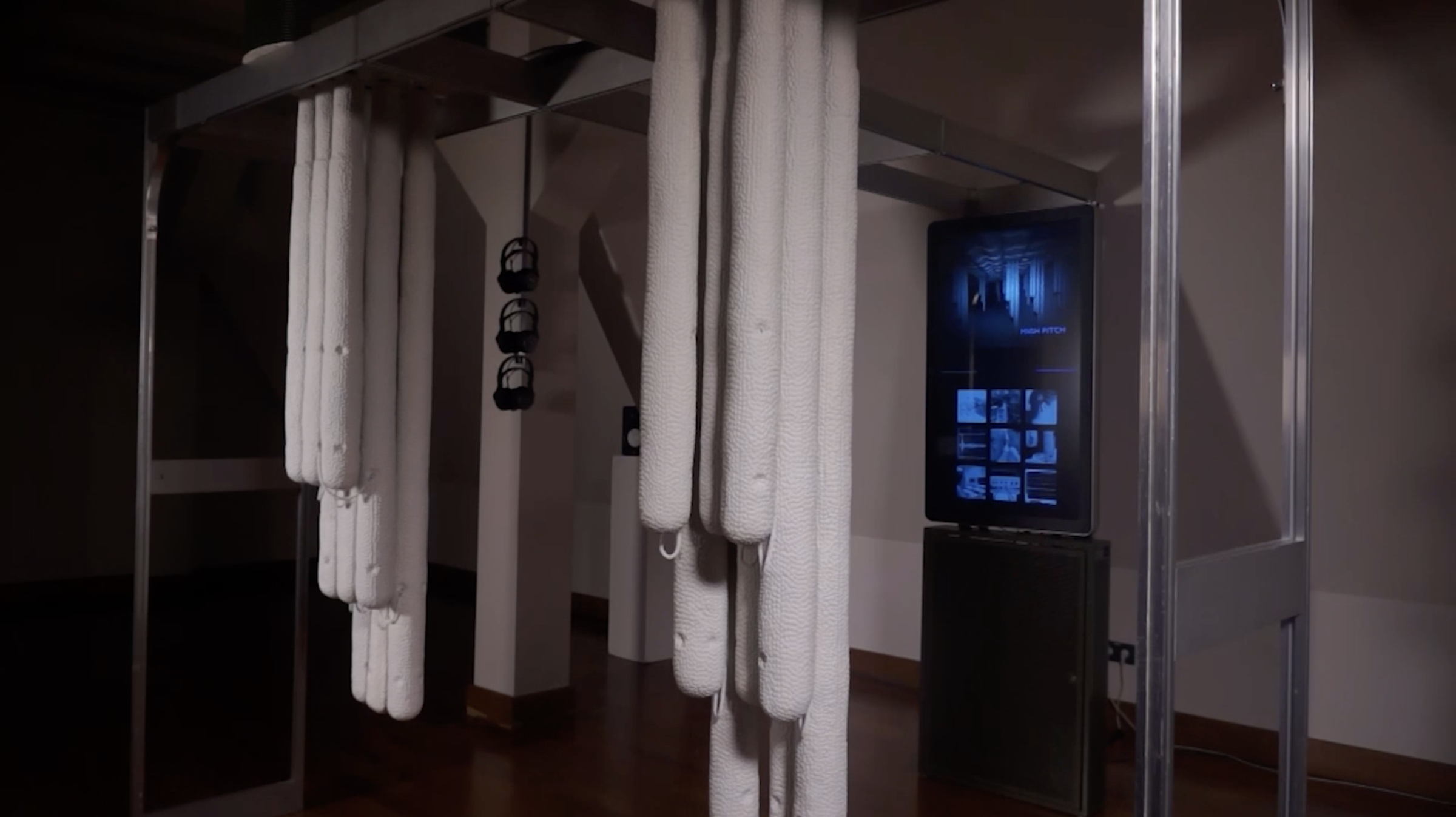
AURALROOTS is an interactive media work that explores listening as a form of embodied learning. Its form is inspired by stereocilia, the microscopic hair cells in the inner ear that translate sound into neural signals, and it invites visitors into a speculative, immersive interior of the ear. Wearing headphones and using a touch screen that displays a dynamic rendering of the cochlea, they can blend up to 54 sound tracks across three registers, each linked to a different way of acquiring knowledge through listening. The low frequencies evoke the experience of a foetus in the womb, recorded with contact microphones placed inside the wombs of volunteering women. The mid frequencies carry oral knowledge passed down by Australian Indigenous women, stories of plants, survival and care told by First Nations speakers. The high frequencies draw on Scott’s residencies in audiology laboratories, with recordings of neural activity and reflections on hearing loss and tinnitus. Across all three, Scott treats listening as ‘an active, participatory process,’ proposing a model of learning that is ‘embodied, relational, and multisensory.’
Artistic career: Jill Scott
Artistic practice and research
Jill Scott (Australia, 1952) is a Swiss-based artist who has worked with performance, video and interactive media since the 1970s, often in dialogue with science. She is Professor Emerita at the Zurich University of the Arts, where she co-founded the Artists-in-Labs program, which places artists inside scientific research laboratories. Her installations, such as Frontiers of Utopia and e-skin, explore the body, perception and the ways we come to know the world.