Odessa, 1944 - 2023
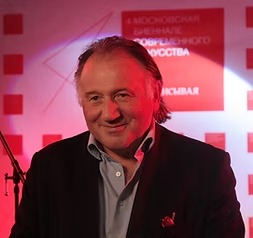
Peter Weibel
Peter Weibel is going to study literature, medicine, logic, philosophy and cinema in Paris and Vienna. He is going to become a central figure of European media art thanks to his six diverse activities as an artist, theorist of mitjans, curator and as a nomad between art and science.
From the end of 1984 to 2017, he has been a professor at the University of Applied Arts of Vienna. From 1984 to 1989, he was head of the digital arts laboratory of the Department of Mitjans of the University of New York in Buffalo, and in 1989 he founded the Institute of new mitjans of the Städelschule of Frankfurt am Main, which he directed at the end of 1995. Between 1986 and 1995, he was the head of l’Ars Electronica de Linz with artistic director. From 1993 to 2011 he was curator at the Neue Galerie Graz and from 1993 to 1999 he entrusted the Austrian pavilion to the Venice Biennale. He will be artistic director of the Seville Biennial (BIACS3) in 2008 and of the 4th Moscow Biennial of Contemporary Art, in 2011. From 2015 to 2017, he will be curator of the lichtsicht 5 + 6 – Bad Rothenfelde Project Biennial.
Peter Weibel will receive the title of honorary doctor. caused by the University of Art and Design of Helsinki, in 2007, and by the University of Pécs, Hongria, in 2013. In 2008, it will be preserved with the French distinction “Officier dans l’Ordre des Arts et des Lettres”. «. The following will be nominated by the ple dret of the Bavarian Academy of Fine Arts in Munich, and will be guarded by the European Cultural Project Prize of the European Foundation for Culture. In 2010, he will be decorated with the Austrian Creu d’Honor for science and art, first class. In 2013 he will be nominated as an active member of the European Academy of Sciences and Arts in Salzburg. In 2014, it covers the Oskar-Kokoschka-Preis [Oskar-Kokoschka Prize] and the 2017 l’Österreichische Kunstpreis – Medienkunst [Austrian Art Prize – Media Art]. In 2015 he will be nominated member of honor of the Russian Academy of Arts of Moscow.
Since 1999, Peter Weibel will be president and director of the ZKM | Center d’Art i Mitjans de Comunicació de Karlsruhe and director of the Institute for Research in Digital Cultures Peter Weibel at the University of Applied Arts in Vienna, since 2017 at the end of his death.
Works from the collection: “Das Tangible Bild”, “The Endless Sandwich”, “Media May Rewind Reality”
http://peter-weibel.at
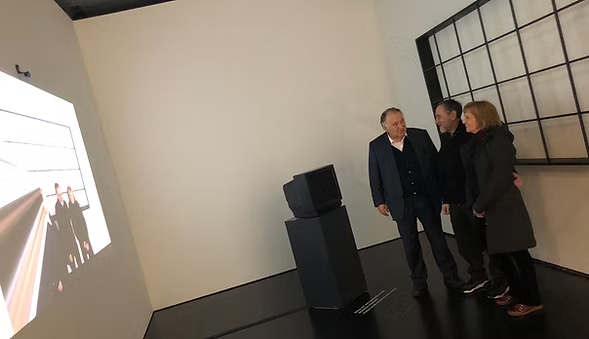
"Das Tangible Bild", 1991 / 2019
The interactive computer installation “Das tangible Bild” [The tangible image], is based on a grid of Cartesian coordinates. The film taken from this grain by a camera, see the image projected on the opposite wall. When you touch the rubber screen of the monitor, which is placed on a pedestal at the edge of the room, the projected image is deformed. Now, you can interact with the image using a three-dimensional “touch screen” in real time. Every time you touch the screen, from which the sensors are installed, the information is sent to a computer to which it is transferred in the live images of the camera. On the computer, screen deformation signals converted into digital data influence the data that represents your spatial image. The screen and the Cartesian graph are identical. Real distortions of the rubber screen appear in the projection image with distortions of the grid ahead of you. An interface (the rubber screen) is activated between the grid and the projection image. It is not the changes to the grain that affect the projection, but rather the changes to the interface. Our world is just the product of an interface technology, the interface of the natural world?
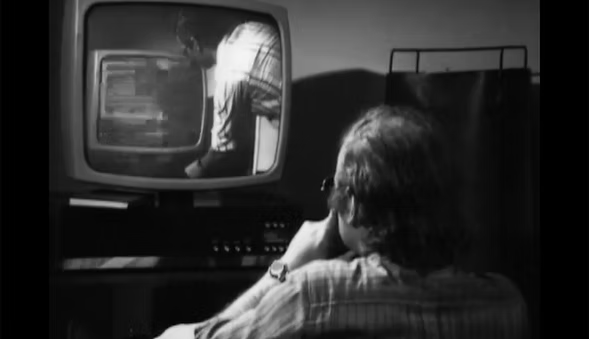
"The Endless Sandwich", 1969
Between the television and the viewer, there is a function by which the user turns the device on and off. This function has been reproduced in the context of the television program. Character between real processes and processes of reproduction, reflection and action. On the screen, a series of viewers are seen in front of the televisions. A fault occurred in the last set shown, that is, the next viewer has to go to repair the fault. This repair causes an interruption to the next viewer’s screen. The interruption is propagated until it reaches the real television, which means that the real viewer has to locate and eliminate the fault. Temporal delay: the real procedure is the conclusion of the reproduced procedure.
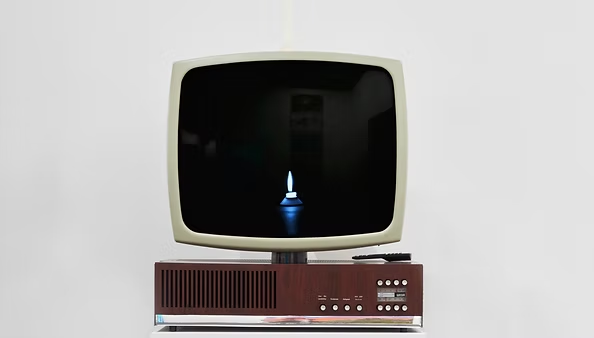
"Media May Rewind Reality", 1969
A video of a piece of information is played backwards on a television, gradually growing measure that the time passes, while a physical body attached to the monitor slowly diminishes.
“Media May Rewind Reality” is a mena of “vanitas” in which the simple image of the flame of a body rethinks temporality and finitude in a loop in which everyone who is consumed also believes in a mena of strange spectacle that invest in the appearances.
Award with the 18th ARCO-BEEP Electronic Art Prize.