
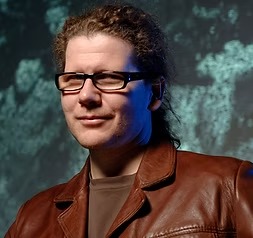
Haltwhistle, 1969.
Charles Sandison
Charles Sandison will always be interested in computing; After 12 years, you will teach the mathematician how to program your computer. He studied art (at the Glasgow School of Art) from 1987 to 1993 and taught briefly after graduating. In 1995 Sandison moved to Finland and resided permanently in Tampere.
During the 1990s, Sandison exhibited alongside young British artists in exhibitions such as; Wonderful Life, Lisson Gallery, London 1993, and Institute of Cultural Anxiety: Works from the Collection Institute of Contemporary Arts, London 1994.
During a five-year break in which Sandison is going to join the Regne Unit and take up the position of Cap de Belles Arts at the Escola d’Art i Mitjans de Comunicació de Tampere. You will obtain a broader recognition of 2001 after exhibiting at the Venice Biennale. In 2004 Sandison became a visiting professor at Le Fresnoy, Lille. In 2010, Sandison won the Ars Fennica award from Finnish President Tarja Halonen.
Much of Sandison’s work included computer-generated video projections that created installations of immersive details, placing the viewer at the center of a universe full of screens, signs and characters. Sandison’s art works to incorporate the viewer into the picture, so that the computer and the human mind can work together. Sandison is inspired by nature and the environment, and tries to capture elements of human life and the current world in which we live.
The new work “Nature Morte” will win the 8th edition of the ARCO-BEEP Electronic Art Prize
Treball a la col·lecció: “Nature Morte”
https://www.sandison.fi
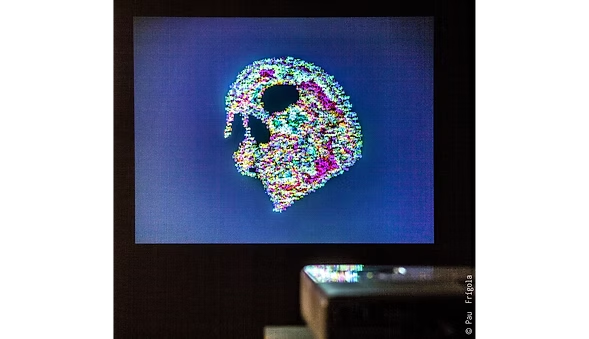
Nature Morte, 2012
The piece is a complete interpretation of the baroque vanitis from the point of view of new technologies. Convinced that language is our interface with reality, Sandison creates computer programs controlled by dynamic molecular algorithms that generate parallels and bring them to life. In the case of the guanyadora work, the artist uses Byron’s quartet that refers to Carpe Diem, the gaudi of the instant, in a generative audiovisual work, as such, always llunyana, that includes elements of literature, romanticism and textuality, as well as a deep reflection on our mitjans.